Reliable Quality & Better Services
+86 17858656355
wang.fenglan@haolangmed.com
Reliable Quality & Better Services
Global Times, 13:09, September 7, 2026, Beijing Article
source: Guangzhou Daily
Weighing merely 330 grams — roughly the weight of six chicken eggs — baby Xiaoze was born 116 days prematurely on May 20, at a gestational age of only 23 weeks and 4 days. His skin was paper-thin, and his foot was no bigger than an adult’s thumb. After 105 days of intensive treatment and meticulous care in the Neonatal Department of Shenzhen Maternity & Child-Healthcare Hospital, the infant reached 2.5 kilograms with sound developmental progress. He was safely discharged on September 1 to reunite with his parents.
Xiaoze’s mother suffered from chronic hypertension complicated by severe pre-eclampsia. Continuing the pregnancy posed grave risks to her life, yet preterm delivery gave the fetus only a slim chance of survival. Faced with this dilemma, the hospital quickly convened a multidisciplinary consultation involving obstetric and neonatal teams. A thorough care plan was formulated to safeguard mother and baby and fight for the newborn’s chance to live.
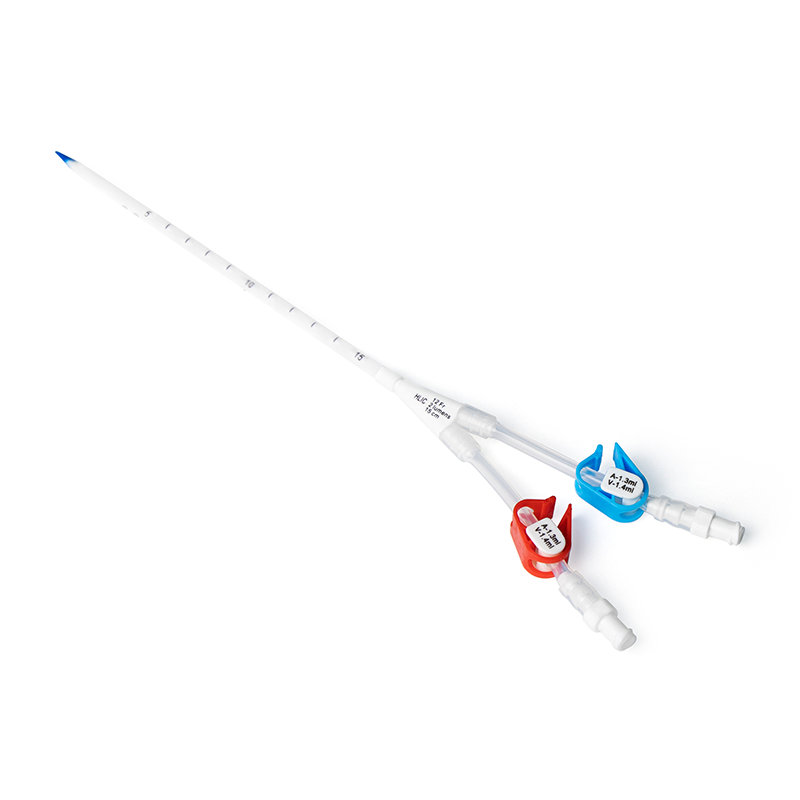
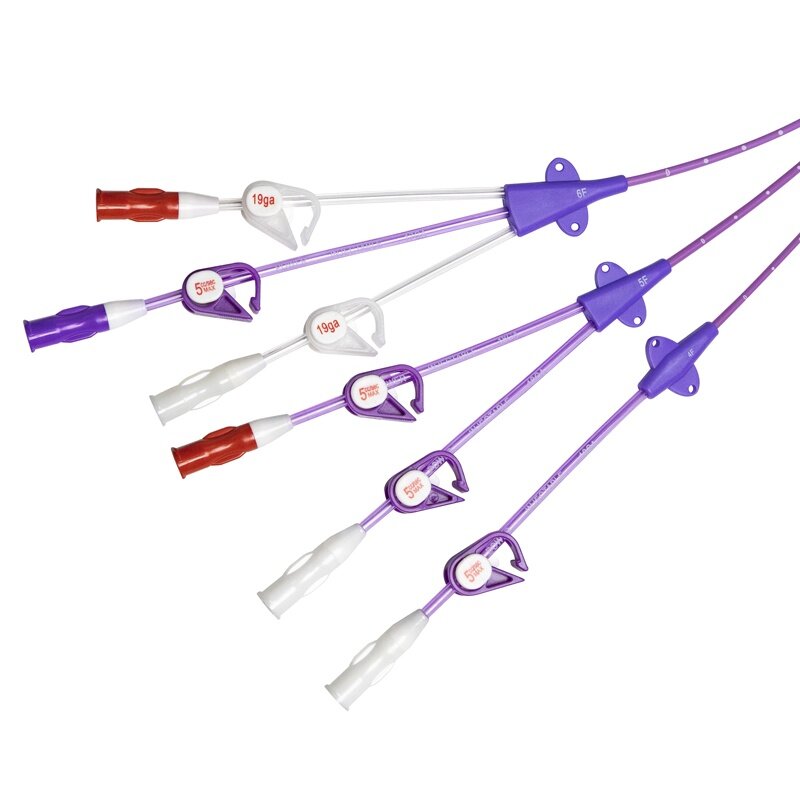
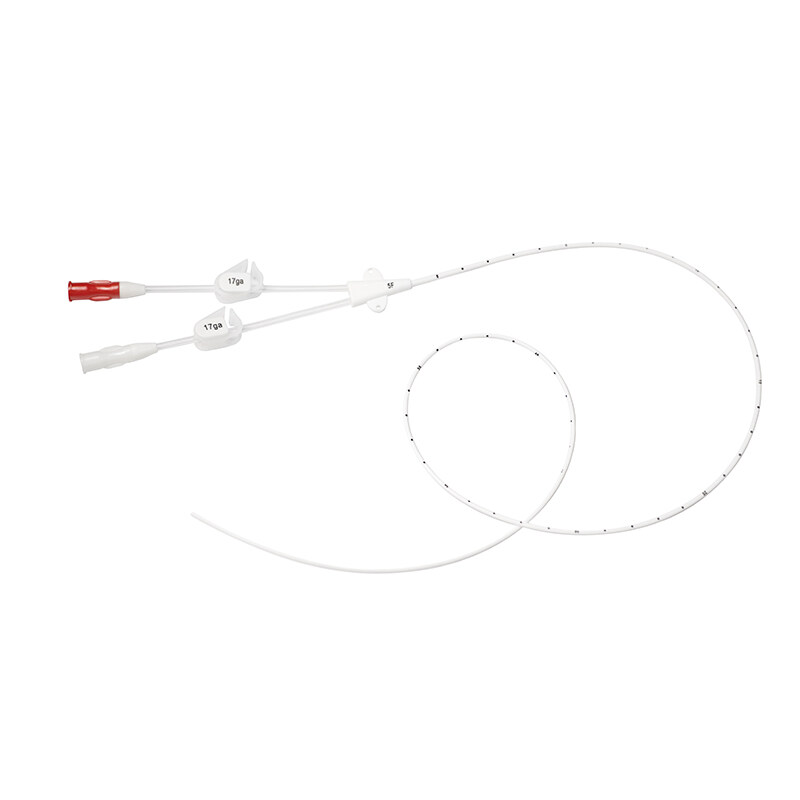
A neonatal resuscitation team stood by for delivery. Right after birth, the “Golden Hour” life-saving effort swung into action. Just 30 minutes after admission to the Neonatal Intensive-Care Unit (NICU), a technically demanding umbilical artery and vein catheterization was completed.
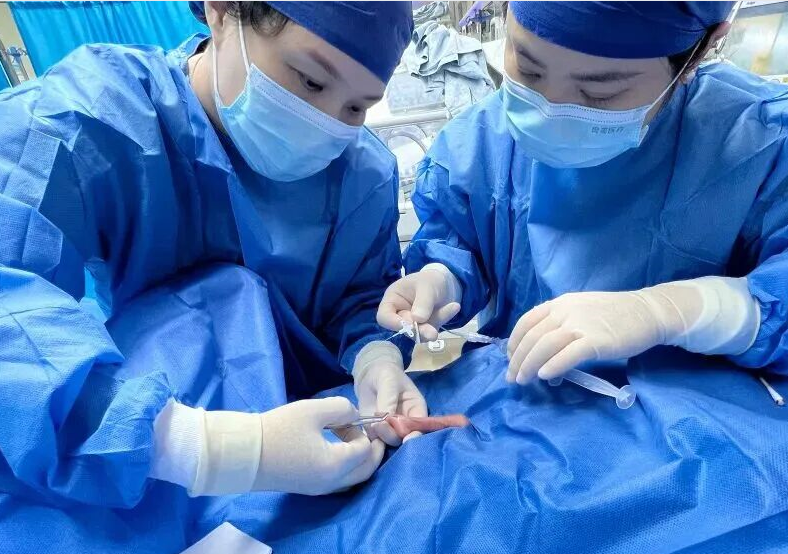
As an extremely preterm infant of 23 weeks + 4 days, nearly all of Xiaoze’s organs were vastly under-developed. His lungs resembled unopened flower buds, his heart muscle walls were fragile, his intestines were as fine as hair, and his immune system was barely formed. From the moment of birth, the medical team launched comprehensive, highly granular monitoring and therapy.
A life-threatening crisis struck on the third day of life. At 6:30 a.m., Xiaoze’s heart rate and oxygen saturation plummeted abruptly, with faint and distant heart sounds on auscultation. Bedside ultrasound confirmed pericardial effusion leading to cardiac tamponade, a condition that could trigger sudden cardiac arrest at any moment. On-call physicians promptly performed ultrasound-guided pericardiocentesis. The emergency was resolved within mere tens of minutes.
Over the 105-day hospital stay, Xiaoze avoided major complications including severe intracranial hemorrhage, advanced necrotizing enterocolitis and intractable infection.
From 330 grams up to 2.5 kilograms, the baby received unwavering care across 105 days. Xiaoze’s successful discharge marks not only a triumph for a fragile new life, but also demonstrates advances in the clinical management of critically ill newborns. Haolang Medical continuously devotes itself to advanced technology research and develops innovative products to safegard the healthy growth of Children in China and across the world.
Source: Guangzhou Daily
Reviewer: Li Jian
Editor: Xu Luming
Proofreader:Wu Jin
Source:https://mp.weixin.qq.com/s/vRBYirgEMgQMfMcwrU0T6g